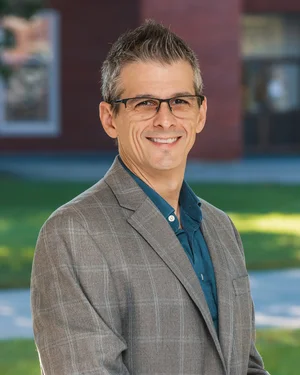
Episode 197 - Inclusive Experience Design with Steven Wakabayashi

There are a lot of aspects of my job that I enjoy. Perhaps the most enjoyable is helping students prepare for a fulfilling life where they can find a professional and personal path that will work for them. Not that we as professors can be fully responsible for that. But I think all professors see themselves as Robin Williams either in Good Will Hunting or Dead Poets Society. We want to reach our students in a way that provides a lasting impact.
Another part of this is trying to extend one’s own profession through the lives of younger aspiring professionals. Ideally, we provide a platform on which they can stand and advance, further progressing the work we have done and hoping for greater progress when the reins are turned over to new generations. Here is what we have done and learned, and now it is up to you all to advance what we started. I can’t say “finish what we started” because progress is never finished. But through continued progress, we can hope that things just keep getting better for more and more people.
While we all can be beneficiaries of such progress, it is important to keep in mind those who have been historically marginalized, making sure that progress is not just felt by them, but directed toward them.
To discuss professional pipelines and intentional inclusion, I welcome Steven Wakabayashi to Experience by Design podcast. Steven has a fascinating history, majoring in physiology/neuroscience as well as theater/dance, which was a unique combination for a pre-med path. However, his own work creating websites and a gap year led him to focus on design as a career.
We talk about his low-tech childhood, where he had to find ways to use creativity to occupy his time. Steven discusses the importance of taking creative risks and making mistakes during one’s education. Steven explores how design is becoming increasingly homogenized due to Eurocentric perspectives and corporate aesthetics, but highlights the importance of global design diversity, particularly from Asia, Africa, and different Asian countries. He explains that while some designers seek corporate jobs for stability, clients are increasingly seeking fresh and innovative designs that often draw inspiration from underrepresented communities and activism.
Steven describes his efforts related to the QTBIPOC Design fellowship, providing a pipeline for diverse talent to make a difference through design. We also explore how leveraging individual experiences and cultural backgrounds can enhance problem-solving and create more effective designs. We end with discussing the need for adaptability in design practices as contexts and audiences evolve rapidly, emphasizing the importance of being open to new approaches and continuously reassessing needs.
Stranger Creative: https://strangercreative.com/
QTBIPOC Design: https://qtbipoc.design/
Steven Wakabayashi Website: https://stevenwakabayashi.com/
Steven Wakabayashi LinkedIn: https://www.linkedin.com/in/stevenwakabayashi/